Bookend
Rendezvous No. 3
What
if books could slip under covers and swap stories?
This
book report couples another pair of unknown titles –
strangers
to each other, until introduced here.
Marquee
Shade & Ghost Light
by
Jamie Jobb
Nineteenth
Century gaslit theaters suffered well-deserved reputations as filthy
firetraps. When the Twentieth Century dawned with the advent of
electrified power, theaters found modern ways to address audience
safety. Electric lights obviously made stages safer, so public
security stimulated box-office demand. Seats sold out and show
business emerged from the deepening taproot of budding consumer
confidence which took up residence in the “Front Of The House”.
Those
who work Front-Of-House tend to regard their theaters as lively
breathing beasts, not unlike Audrey-The-Venus-Fly-Trap in “Little
Shop of Horrors” – wonderful monsters with thunderous biorhythms
and surprising seasonal scents. “FOH” personnel take full
responsibility for every single audient in The House, from the street
to the seat and back outside again.
Doormen,
box-office clerks, ticket-takers, concession-stand hands, janitors,
ushers, managers all constitute off-stage personnel necessary for
keeping their houses humming for a show. All these public-servants
aim to provide ongoing audience support that is mostly ignored by
those of us with tickets, unless we require restroom locations or
seating assistance.
Performers
onstage know their show can’t go on if nobody works FOH – that
periodically-populated public space which includes marquee, posters,
lobby, bar, concessions, restrooms, alleys, stage door – every
square inch of a theater that has “something to say”
about the unique experiences which transpire inside the building.
In this Bookend Rendezvous, we introduce two unfamiliar titles which illuminate show business from uniquely specific, albeit inside-out perspectives – “Ghost Light: a Memoir” by Frank Rich and “Places of Performance: The Semiotics of Theatre Architecture” by Marvin Carlson. Whereas Carlson’s book is a densely detailed academic tome of theater hardscapes, Rich’s memoir is a rip-snorter recollection of well-spun yarns which is very difficult to put down. Both books are worthy of the time they demand of a serious theater student.
Frank
Rich recalls U.S. history behind The National Theatre’s second door
Ghost
Light: a Memoir
by
Frank Rich
New
York: Random House, 2001
Notorious
as “The Butcher of Broadway” during his long stint as New York
Times chief drama critic from 1980-1993, Frank Rich became better
known for the depth and breadth of his journalism after he left daily
dramatic criticism. Rich’s uniquely American perspective coaxed
his writing into fruition as top-tier op-ed critic-at-large for New
York Magazine. Later he slow-pitched his own show business success
as executive producer for HBO’s biting satire “Veep”. Now Rich
may be better known as “The Butcher of the Beltway”.
The
largesse of Rich’s personal journalism is obvious to any reader of
“Ghost Light” – an enticing yet clearly transcribed
series of “selfies” from his charmed childhood love affair with
live theater. Although only 51 when
he wrote the book two
decades ago,
Rich
dwells on his adolescence
in Washington D.C. during the 1950-60s before he left
home to begin life on
his own. Rich was a
privileged adolescent who
came of age in the Front of The
House during a time of
“Camelot”. And
he knew exactly what that meant.
Rich’s
meticulous recall blossoms slowly into much more than mere memoir.
And, like show business itself – everything had to do with timing.
Clearly more than once Frank Rich found himself in the right place at
the right time. Indeed, his young life was so charmed that his
parents’ divorce actually propelled his career.
He
was a self-motivated quick-study as a preteen writer. A lone child
inspired by musicals, he grew up wondering: “Why would anyone
throw away a playbill?” Not
such a strange question as he frames it in
this midlife examination
of his peculiar upbringing.
Lucky
for Frank Rich, both father figures in his life – real dad and step
dad – had more than casual interest in all things Broadway.
Playbills were regular visitors to his
home(s).
His mother also kept a theater scrapbook. Stepdad
Joel not only saved
playbills but also dispensed sage Broadway
advice. Young
Rich took it all in like the
executive producer he was becoming.
On his very first visit to The Great White Way, he got
punched by a solid hunch:
“In Shubert Alley
that night I had unwittingly reached the threshold of an entire
landscape of alleys that would lead to a world of theaters each a
house packed with strangers both generous and mean, shabby and grand.
It was to be a life full of the transitory moments, double-edged
with ecstasy and loss, that I had already come to think of as
theater. And following the example of Mom and her scrapbook, I would
try to memorialize this life as it passed, hoping to freeze time and
hold each moment before it fled.”
An
observant young man, Rich most esteemed musical theater. Not
unlike child actor/theater critic Iain
Armitage (CBS-TV’s
“Young Sheldon”), Rich
tracked his own
Broadway habit
by
amassing
a
playbill collection of
shows he attended. He
even admits
scouring trashcans
of Tin
Pan Alley for tossed
programs
of shows he didn’t see.
Rich
also copied by hand entire
Times Square newspaper
advertisements. The kid fell asleep with
all the
Lullabies
Of Broadway
he’d heard dancing in
his dreams!
* * *
“People
came and went, but the theater stayed.
Even
an empty playhouse had drama,
intense
and perhaps momentous.”
– Frank Rich
* * *
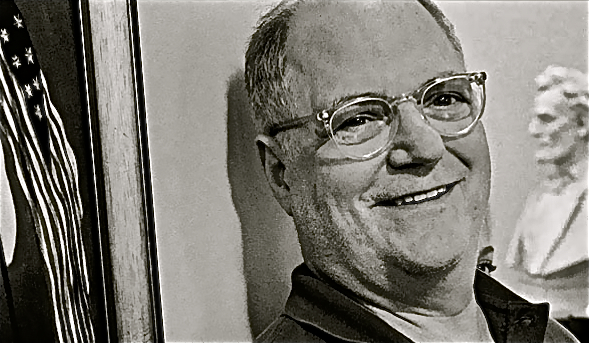
Portrait
of young “Butcher of Broadway”
Located
at 1321 Pennsylvania Avenue just three blocks from The White House,
The National Theatre is a privately-owned venue with a long, proud
history in the nation’s capitol. Although it burned down and was
rebuilt three times, The National remains America’s oldest theater
continually operating in the same address since 1835. Despite that
ancestry, in no way is it associated with that publicly-endowed
jewell in the United Kingdom’s cultural crown – The National
Theatre of London.
Young
Frank Rich lived in Cleveland Park within four miles of the theater,
the closest D.C. ever got to Broadway. Rich saw so many touring
shows at the National that he eventually caught the attention of
theater manager Scott Kirkpatrick who stopped the lad one day and
offered him a job as second doorman. With that FOH position came his
first “pass” into the theater. Now that Frank was “on The
Door”, he could get in free.
But
Rich learned right away that if he actually wanted to see an
entire performance, he’d have to do so on his own time – stuck as
he was in the office during the show, trying to balance The Count
(tickets sold) and The Deadwood (unsold, unsat seats).
From
his vantage at The National’s second door, Rich lets his readers
thoroughly tap the epic beats of American history during that
turbulent time of undeclared war, public disobedience, assassination,
civil rights and riots.
*
* *
“Broadway
seemed a place where no matter what happened in the rest
of
the world, a closing would always be followed by an opening,
an
empty house would always become full again.”
– Frank Rich
*
* *
At
their most visceral level, theaters are celebrations of light and
sound – particularly after the stage has been set and the seats are
full. But when “The House is dark”, theater people understand
the place is not really dark.
Every
House has its “ghost light”, basically a bare-bulb pole lamp
without a shade. The first time he saw one, Frank Rich was shocked:
“Only a few hours earlier, I thought, there had been people
talking and laughing and crying on this stage as if their lives would
never end. Now there was nothing but what looked like a giant
night-light. It stood at the center of the empty stage: a tall black
pole with a single lightbulb at its top, a solitary lamp casting
stark shadows everywhere. What was its point?”
Superstitious
thespians (google “The
Scottish Play”) believe a ghost will haunt a theater unless the
ghost light remains lit on stage while The House is empty. Indeed,
the words “ghost” and “theater” co-star in the same sentence
so often that it’s no accident every House has a ghost light.
A
short sidebar follows this essay. It tells the true tale of John
McCullough and describes in more detail how ghost stories can became
embedded in a theater.
*
* *
Edwin
Booth’s set for “Merchant of Venice” in 1864
Places of Performance:
The
Semiotics of Theatre Architecture
by
Marvin Carlson
Ithaca,
NY: Cornell University Press, 1993
Marvin
Carlson is distinguished professor of theater at University of
Washington and State University of New York, so we should expect him
to pen an academic tome – a deep text that requires plenty of
processing time, a read-a-page-and-think-about-it-book.
Carlson
concerns himself with how a theater “signs” itself to a
community. He observes that a theater’s impact may be judged best
by what its location and architecture say about society’s attitude
toward the place. His lens is the science of Semiotics, the study of
how things display themselves in public. In other words, what a
venue “says” about itself beyond its proper name. Carlson
states:
“… the theatre
building which in addition to providing a space for the performance
of a dramatic text has taken on a wide variety of social meanings
over the centuries – a cultural monument, a site of display for a
dominant social class, an emblem of depravity and vice, a center of
political activism, a haven of retreat from the world of harsh
realty. Nor are these many connotations without effect on the
physical theater space, many elements, some evident, other subtle, of
contemporary and historical theater provide striking evidence of the
semiotic role played by a theater in its society.”
Few
who attend live performances stop to comprehend semiotic meanings in
the theater, as we are more concerned with the meaning of the drama
on stage. Carlson knows we’re missing a bigger context:
“Every element of
the spectator’s environment during ... performance – the singing,
the scenery, the orchestra, the lobbies and bars at intermission, the
programs, the ushers, the other audience members – contributes to
the way in which that spectator ‘makes sense’ of the event, and
all these may be subjected to semiotic analysis.”
Although
less notorious than Frank Rich, Carlson is a recognized expert in
western theater history. But it’s
not easy to comprehend an author who asks “How do theaters
mean?” Upon
reflection, that’s
a very probing
question when you face
it head on. Put
another way: How do theaters tell and sell
themselves to the public? What is their story, beyond those
fleeting moments of poetry dramatically
presented on stage?
Take,
for example, the statement that a venue is a “Broadway” theater.
Carlson points out that Broadway was the main drag, the street most
people used to get to the theater district. But in fact most
theaters were on side streets and their marquees had to be affixed to
the building on a diagonal, so patrons could read it on Broadway!
Carlson
acknowledges Brander Matthews as the first American professor of
theater studies to establish semiotic study. Much of their academic
effort has landed in Columbia
University’s collection of historic theater models and
memorabilia which Carlson draws upon heavily for his research. Theater architecture is akin to Greek temples or Roman churches with
an assembled mass “set off from the rest of the world.”
*
* *
“There’s
a difference in not getting laughs,
and
changing the architecture of the theater.”
– Lenny Bruce
* * *
And
it may be a little difficult to believe, but Carlson’s textbook
helped me comprehend how to find the best seat in The House for a
spectacular farce we saw a few years ago. The book’s advice worked
for us when we were among the audience for Dario Fo’s "Accidental
Death of an Anarchist" at
Berkeley Rep’s Roda Theatre. After reading Carlson’s
descriptions of
seating arrangements
of
indoor theaters of the
Renaissance
being
arranged around
“the ducal box” seats,
I realized which tickets
were best for
us as
I scanned
Rep’s digital House
chart.
We
picked seats in the mezzanine, first row – right in the middle of
The
House.
Indeed,
these
were
the best seats
to
see
Fo's explosive
anarchist
brand
of farce. The
Duke’s box in
Renaissance theaters was
positioned in direct
counterpoint
to the stage:
right
in
the crosshairs
of
a set’s
vanishing
point.
So
when the final bombastic image of "Accidental/Anarchist"
burst through the Roda’s proscenium, it had an extremely powerful
impact upon all of us because we were sitting in the exact seats
where the effect was meant to be seen.
From our point of view, this
was truly inspired theatric pyrotechnics
-- a literal
Big
Bang -- that was far more unique than any violent fireworks
display
Hollywood
could
dream up on a $20 million budget.
*
* *
The
Ghost Light for John McCullough
In
its Sunday edition
of 4
October 1896, The
Washington Post reported an
eerie experience
of Frederic Bond, well-known comedian
and close friend of Irish-American
actor John
McCullough. Bond was sitting alone
at the National Theatre
late one night in
rehearsal at a
prompter's table downstage.
Running
his lines
in flickering gaslight, the
actor heard
a disturbing noise.
He
looked into the wings then out into the darkened auditorium, and saw
no one. Thinking he‘d misheard something, Bond returned to his
memorization. But again a frightful noise stopped him. Peering into
gloomy shadows, he wondered if another actor or the nightwatchman had
crossed behind the curtains. Maybe someone was playing a trick on
him?
Suddenly
the hairs on the back of Bond’s neck arose as he felt nearby the
invisible presence of a hovering being. Bond saw an apparition
gliding across stage before stopping in front of him. Recognizing the
visage, Bond called out: "John? John McCullough!!!"
whereupon the figure disappeared into the wings.
Then
suddenly another transparent figure materialized. Bond recognized it
as the recently-deceased Eddie Specht, an eager young property-boy
who idolized McCullough. When the theatre was empty, Specht would
often mimic McCullough's roles on the bare stage. Eddie's ghost
followed McCullough's spirit to the same spot offstage and also
vanished.
Time
has scattered evidence and witnesses, but rumors persisted that an
actor had been murdered and buried under the National stage where
Tiber Creek flowed in an open drainage ditch beneath the boards. That
channel was not enclosed by a storm sewer until the 1950s. Running
water could be heard after heavy downpours during quiet scenes in the
auditorium above. The convenient creek below-stage provided actors
with a perfect place to wash costumes, hang out, have arguments and …
get murdered.
However
it’s questionable whether the victim was truly actor John
McCullough, or just another “John”. Evidence exists that the
unfortunate McCullough contracted a "social disease" which
affected his mind. This rendered the actor increasingly ineffective
in bizarre performances which found him confusing his blocking and
forgetting lines. He appeared on stage for the last time in
Washington in 1884, and died mercifully the following year in
Philadelphia where he also was alleged to have been buried.
Getting
wind of this murky circumstance in the 1930s, Washington police
planned to dig up the National Theatre’s earthen floor below the
stage, exhume any corpse and give McCullough a proper grave in a
proper cemetery. But a close-knit clan of thespians opposed those
plans and rallied against any scheme to disturb their fellow actor
resting-in-peace exactly where he wanted to be.
While
beyond scientific scrutiny, McCullough sightings continued to be
reported well into the 20th Century. But are they legend or legacy?
Just when cynical sensibilities could debunk such lurid tale of
backstage murder and walking dead, new evidence emerged. In
renovations of The National during its refurbishment of 1984, no body
was found but a rusty pistol turned up in the dirt beneath the stage.
The theatre's manager turned it over to the Smithsonian.
https://web.archive.org/web/20050901065753/http://nationaltheatre.org/location/ghost.htm
FURTHERMORE
Frank
Rich audio interview 6 February 2015
(21
minutes)
Shows
About Show Biz:
THANKS
for helping me learn The House:
Marvin
and Sadie Reed, Van Fleisher, Ken Brown, Jerry Jones, Jonathan Demme,
Greg Weglarz, Buckley Weglarz, Stanley Balcauskas, Gretchen Green,
Martha McDonough, Richard Janaro, Randy Nott, Ryan Terry, Diane
McRice, John Lytle, Todd Drummond, Dave Pursley, John Burgh, Mark
Hinds, Helen Means, Eddie Roberts, Gwen Sampson, Robert Brown.